What regulation 44 requires
The registered person must make sure an independent person visits the home at least once each month. The independent person is appointed by the registered provider, at the provider’s expense, under regulation 43. The same person can be appointed for several of the provider’s homes.
The purpose is set out in the regulation: to form an opinion on whether children are effectively safeguarded and whether the conduct of the home promotes their well-being. Ofsted looks at both the reports themselves and what the provider did about them.
Who can be the independent person
Regulation 43 lists people who cannot be appointed because they are too close to the home. The DfE guide adds that the independent person should be rigorous and impartial, with no conflict of interest. Use the check below for anyone you are considering.
Is your proposed independent person independent? (regulation 43)
Tick anything that applies to them.
Nothing ticked: no disqualifying factor from regulation 43 so far. They must still declare any conflict of interest without delay.
The independent person must tell the provider about any actual or potential conflict of interest without delay and, where practicable, before a visit.
What happens on a visit
The registered person must make it possible for the independent person to:
- interview children, their parents and relatives, and staff, in private if they want, with the person’s consent;
- inspect the premises and the home’s records (a child’s case records only with the appropriate consent);
- visit unannounced.
Good visits follow lines of enquiry: themes from the last report, incidents and restraint since then, missing episodes, complaints, and what children say. A visit that only reads records, or only talks to staff, is easy to spot in the report.
How the Residential Childcare App handles this
The independent person has their own login, limited to the homes they are appointed to. They get a summary-level records pack for the month (incidents, restraint, missing episodes, complaints, notifications) without children’s names, and write the report in the app.
What the report must say
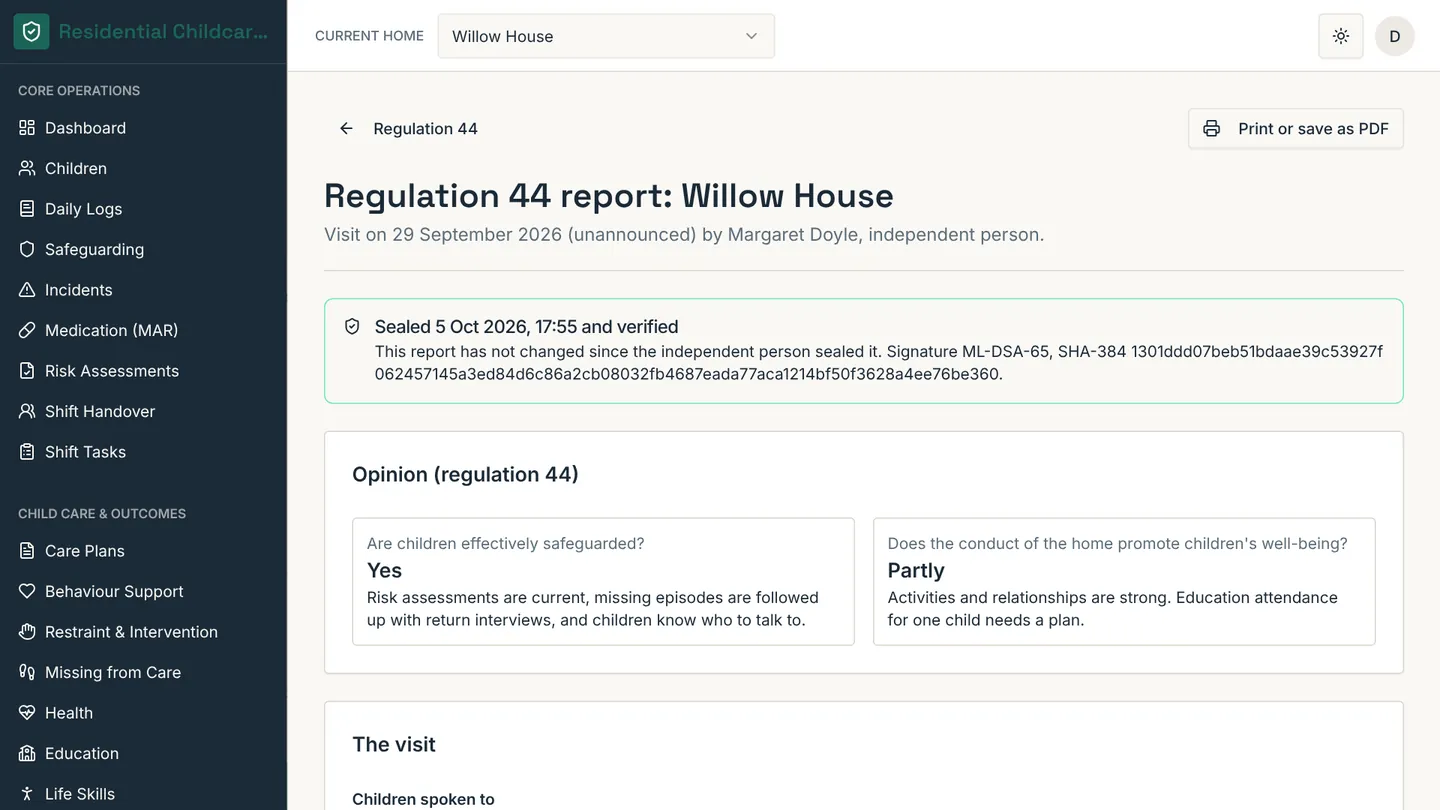
The report must include the independent person’s opinion on two questions:
- Are children effectively safeguarded?
- Does the conduct of the home promote children’s well-being?
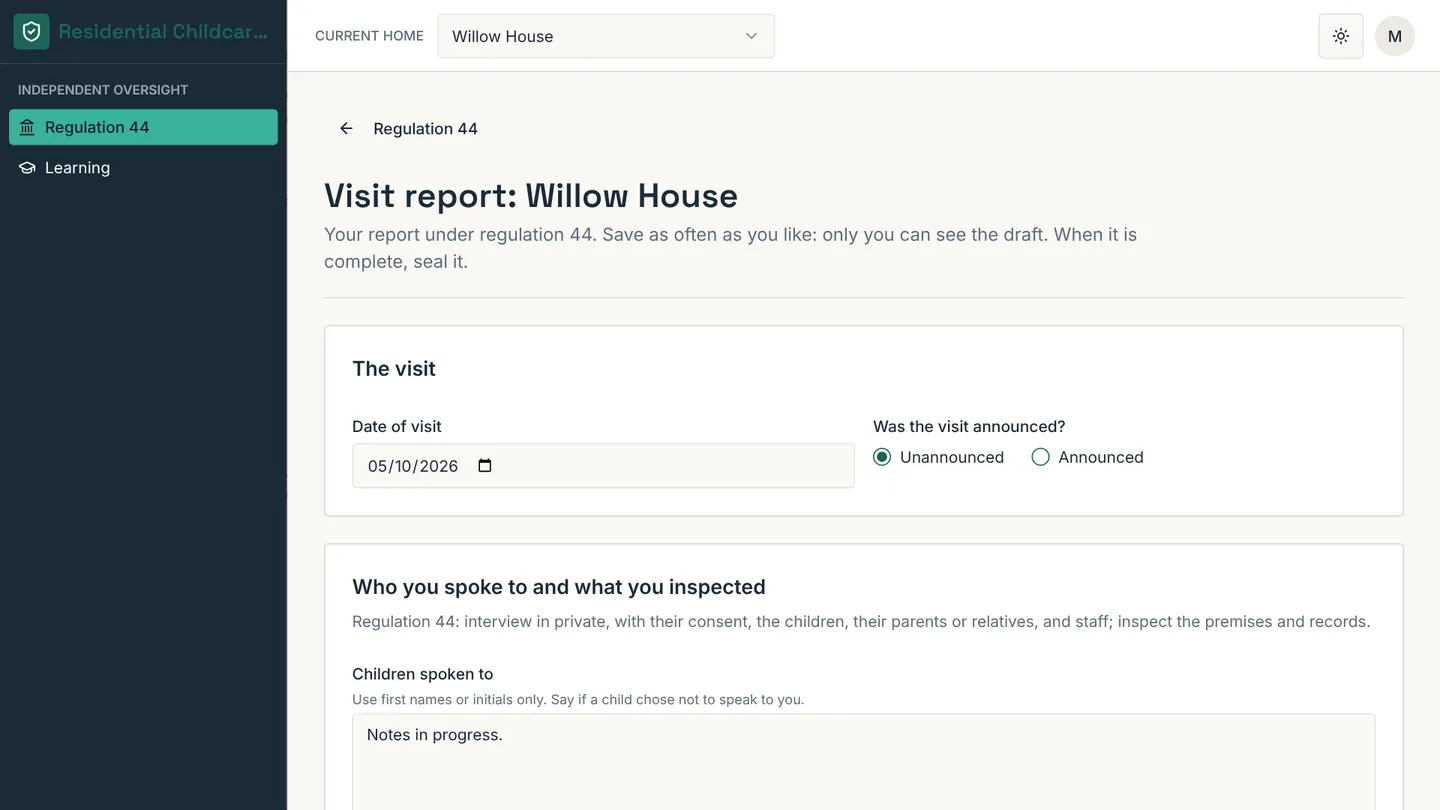
A useful report also says who was spoken to and how, what was inspected, what has changed since last month, and specific recommendations. Above all, it must be the independent person’s own view. A report that the home has edited, or that reads like the manager wrote it, undermines the whole point of the visit.
How the Residential Childcare App handles this
Only the independent person can see their draft. When they submit, the report is sealed: its contents are hashed and signed with a post-quantum digital signature (ML-DSA-65). Nobody at the home can change it, any tampering would show at once, and every view of the report is logged.
Who gets the report, and by when
Copies of the report go to:
- Ofsted (HMCI);
- the placing authority of each child at the home;
- the registered provider, the registered manager and the responsible individual;
- the local authority for the area, if it asks.
Ofsted’s guidance for providers says the report must be sent to Ofsted by the end of the month after the visit, even if no children live in the home, with the home’s URN and the date of the visit on it. It can be emailed to Ofsted.
Regulation 44 deadline calculator
Ofsted asks for the report by the end of the month after the visit, even if no children live at the home, with the home’s URN and the visit date on it.
Making the visits count
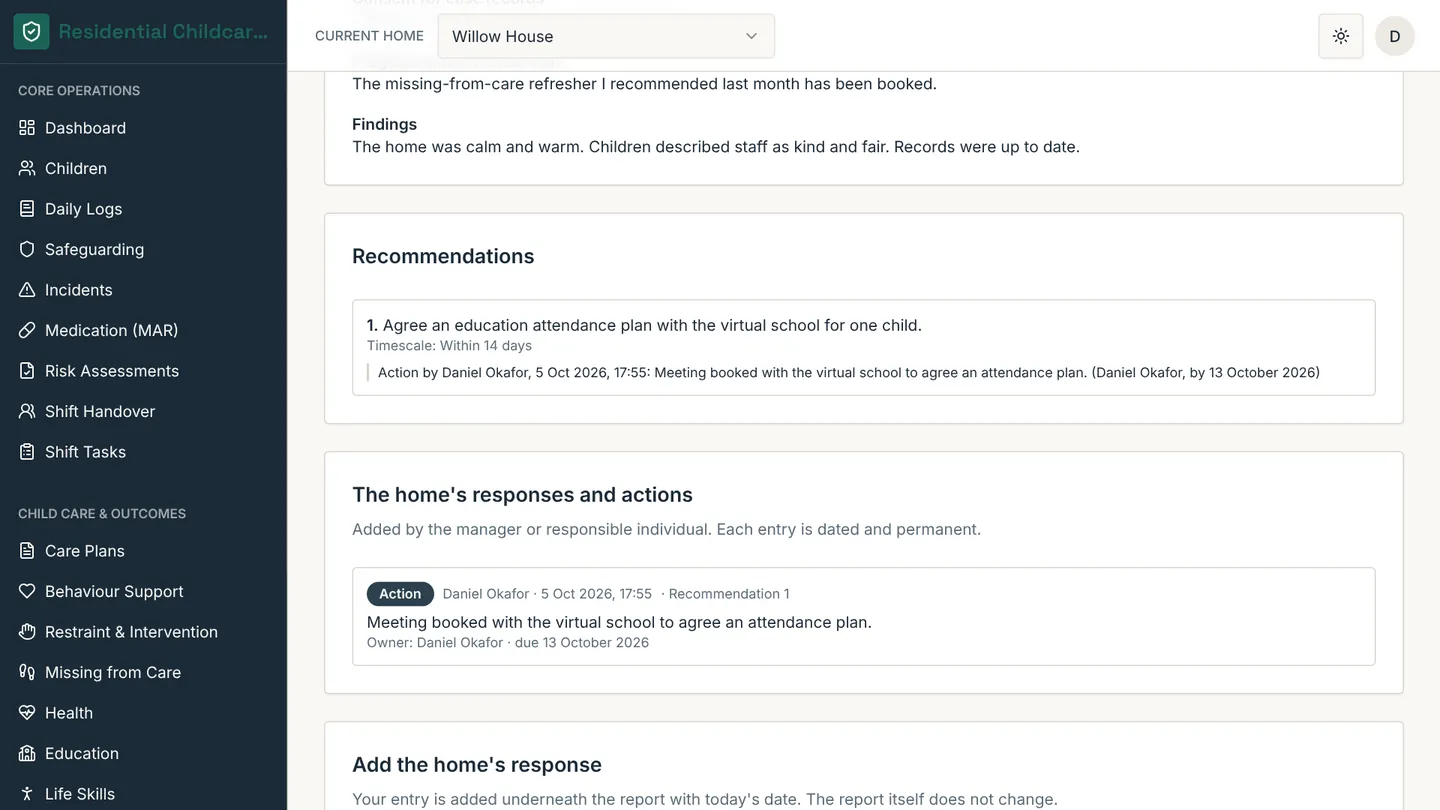
- Respond to every recommendation in writing, with a named person and a date.
- Check at the next visit whether last month’s actions happened.
- Use the reports in your six-monthly Regulation 45 review to spot patterns.
- Keep a record of when each report went to Ofsted and each placing authority.
How the Residential Childcare App handles this
The home adds dated responses and actions underneath the sealed report, and records when and how it was sent to Ofsted and each placing authority. The compliance hub shows any month where a visit is still due.